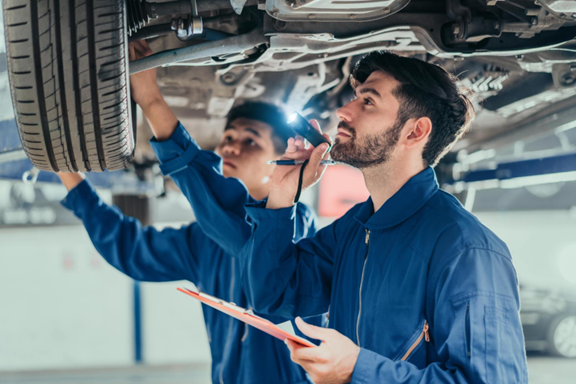
Walk into a modern repair shop and it may look familiar at first glance. The lifts are still there. The tool chests still line the walls. But listen closely and you will hear something different. The click of diagnostic scanners, the hum of software updates, the quiet concentration of technicians interpreting data rather than simply replacing parts. The work has changed, even if the setting has not.
Auto repair is no longer defined by mechanical strength alone. It is defined by judgment, interpretation, and technical awareness. The vehicles arriving at the bay today carry more computing power than entire systems did a generation ago. For students and emerging professionals like Jeffrey Donald Lux, this shift is not theoretical. It is the reality shaping how skills learned, practiced, and valued in the automotive field.
From Mechanical Instinct to Diagnostic Precision
Traditional automotive abilities are still important. Heating and cooling systems still require constant maintenance; suspensions still need to be aligned, and engines still need to be replaced. The way issues are found before the first wrench is twisted has altered.
Modern vehicles rely heavily on onboard computers that monitor performance across dozens of interconnected systems. Technicians must now read fault codes, analyze sensor behavior, and understand how electronic signals interact with mechanical components. Diagnosis has become a process of interpretation rather than assumption.
This change is good for people who are good at solving problems. These days, professionals can’t just trust their gut; they need to use facts to back up their decisions. These days, troubleshooting quickly depends on knowing how software, devices, and systems talk to each other in the real world.
Electrical Knowledge Is No Longer Optional
In the past, electrical systems were considered a specialized area of car repair. These days, they are essential to almost all of a vehicle’s operations. Electrical architecture affects comfort, safety, and performance in everything from climate control to ignition timing.
Technicians are expected to understand wiring diagrams, voltage behavior, and system logic. Misinterpreting an electrical issue can lead to unnecessary part replacement or unresolved problems. Precision matters, and mistakes are costly.
As vehicles become more electronically integrated, the technician’s role shifts closer to that of a systems specialist. Mechanical knowledge remains essential, but electrical literacy determines effectiveness.
Technology Demands a Broader Kind of Discipline
The pace of the job has changed because of new tools. Software updates, calibration, and diagnostics that are specific to the maker all need time and precision. If you rush into a process, the effects may not be as good.
Key skills now expected from modern technicians include:
- System-level troubleshooting, not isolated fixes
- Comfort with diagnostic software and digital interfaces
- Attention to procedural accuracy, especially during calibrations
- Adaptability, as vehicle platforms continue to evolve
These skills are not learned once and applied forever. They require continuous reinforcement.
Hands-On Training Still Defines Competence
Automotive work is still hands-on, even though technology has come a long way. Taking apart and putting back together engines, fixing climate systems, and doing rotations all need a knowledge of how things work. Technology can’t do away with training that you do with your own hands. It has set a higher standard for it.
Effective technicians combine physical familiarity with technical reasoning. They understand how systems behave not only on a screen, but under real operating conditions. Education that blends theory with practice produces professionals who can adapt as vehicles change.
Continuous Learning Has Become Part of the Job Description
Automotive technology does not pause. New models introduce new systems, updated diagnostics, and revised service protocols. Technicians who stop learning risk falling behind quickly.
The construction of jobs in automotive technology is altered by this reality. Curiosity, self-control, and a desire to stay up to date are necessary for success. Hands-on experience, training courses, and certifications are no longer optional extras. Professional maintenance includes them.
Individuals who adopt this approach typically handle complexity with more assurance and remain relevant for longer.
The Technician’s Role Is Becoming More Strategic
As vehicles grow more complex, technicians increasingly influence outcomes beyond repairs. Accurate diagnostics reduce downtime, control costs, and improve customer trust. Poor diagnosis is the opposite.
Today’s mechanic makes a direct impact on how efficient and reliable things are. The work impacts safety, the cost of running the vehicle, and how well the vehicle works overtime. With more duties, this job is more prestigious and requires higher standards.
Technology has not simplified the job. It has refined it.
Preparing for a Future That Will Keep Moving
The automotive business is characterized by continuous transformation, and the upcoming generation of professionals is entering this field. Expectations will continue to change as a result of hybrid systems, improved driver assistance, and increasingly complex onboard software.
Technology is redefining the skill set of today’s auto technicians, not by replacing traditional knowledge, but by demanding more from it. Those who meet that demand will find the field challenging, relevant, and full of long-term opportunities.